When summer arrives, most marketing teams slow down. But customers’ interest in products, inspiration, and new purchases doesn’t take a vacation.
They sign up for newsletters, compare products, make purchases, and return to brands they like. For e-retailers, this means that The customer journey continues, even when things slow down at the office.
That’s why summer is also the perfect time to think about how communication can continue to create value—even when the marketing team is relaxing in their lounge chairs.
Prepare now and reap the rewards all fall long
Many people still associate automation with technology, workflows, and advanced systems. But at its core, it’s about something much simpler. It’s about Let the customer’s behavior guide your communication rather than the company’s campaign or mailing calendar.
Summer is also the perfect time to prepare customer interactions that will continue to create value even when the marketing department is on vacation. When someone signs up for a newsletter, makes a purchase, or abandons their shopping cart, there’s often a natural next step in the interaction.
By setting up these workflows in advance, communication can remain relevant and personalized, even when the team is on vacation.
According to several industry studies, automated emails Furthermore, they are often more effective than traditional mailings, precisely because they are based on the recipient’s own actions and interests. When fall rolls around, the framework is already in place, making it easier to build on what works, create even better customer experiences, and free up time for new initiatives.
Small changes can have a big impact
The great thing is that you don’t need to build large, complex customer journeys to get started. Many of the most effective automations are actually the simplest.
For example, this could include:
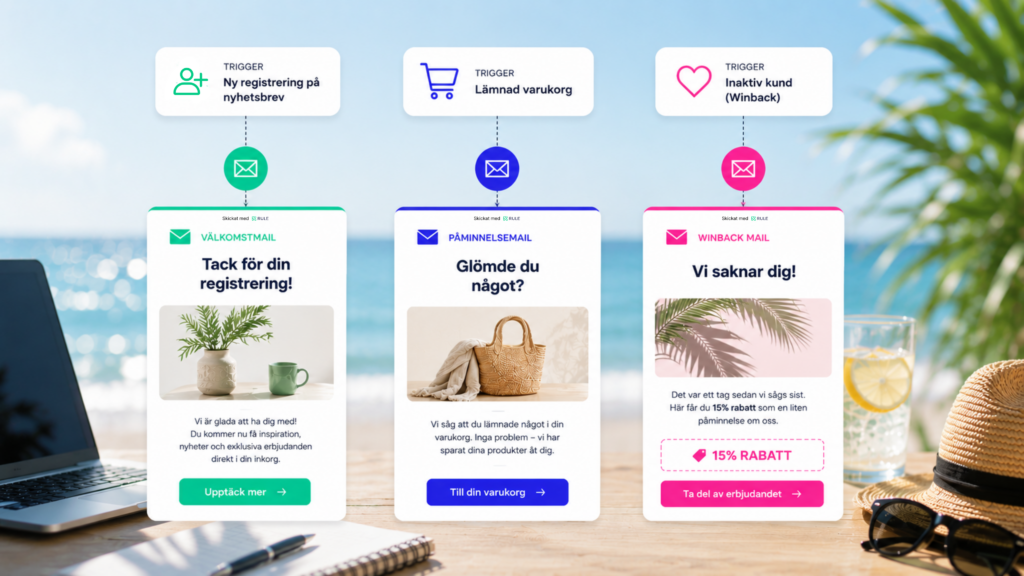
- A new customer signs up for the newsletter
A welcome email is automatically sent to introduce the brand, highlight popular products, and inspire a first purchase. - A customer abandons their shopping cart without completing the purchase
Did you know that over 70% of all shopping carts are abandoned before the purchase is completed? That’s why shopping cart reminders are one of the most effective automation tools in e-commerce. - A former customer hasn’t made a purchase in a long time
A reactivation workflow helps you stay in touch with customers who haven’t been active for a while.
What makes this type of automation so valuable is that it continues to be relevant even when the marketing team is focused on other things. When communication is based on the customer’s interests, needs, and behavior, it becomes more targeted, which in turn strengthens the relationship with the brand over time.
Here you can learn more about how to create relevant and effective customer interactions and customer experiences.
Summer is a great time to get started
Many companies wait for the perfect plan before they get started with automation. But often it’s better to Start small.
Think about which emails or customer interactions you find yourself returning to time and time again. What questions do you get asked most often? Which steps in the customer journey would benefit from being automated?
Often, a single automation is enough to create better customer experiences and free up time internally. A classic example is abandoned shopping cart. When a customer abandons a purchase without completing it, an automated email can help bring that person back. It’s a simple dialogue that continues to create value regardless of whether the marketing department is available or not. For many e-retailers, it is precisely Shopping cart reminders and automated workflows a natural first step toward creating more relevant customer experiences.
And by the time fall rolls around, you’ll have already established a communication strategy that continues to create value, whether someone is in the office or not. Because the best automation isn’t about sending more emails. It’s about creating value in the moments that actually matter.